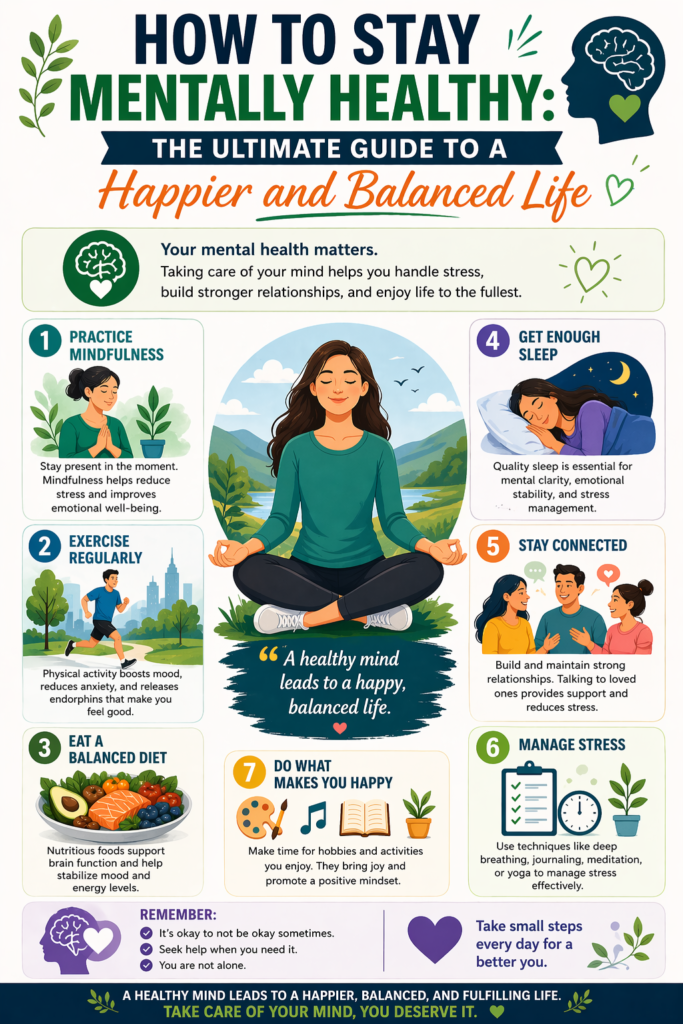
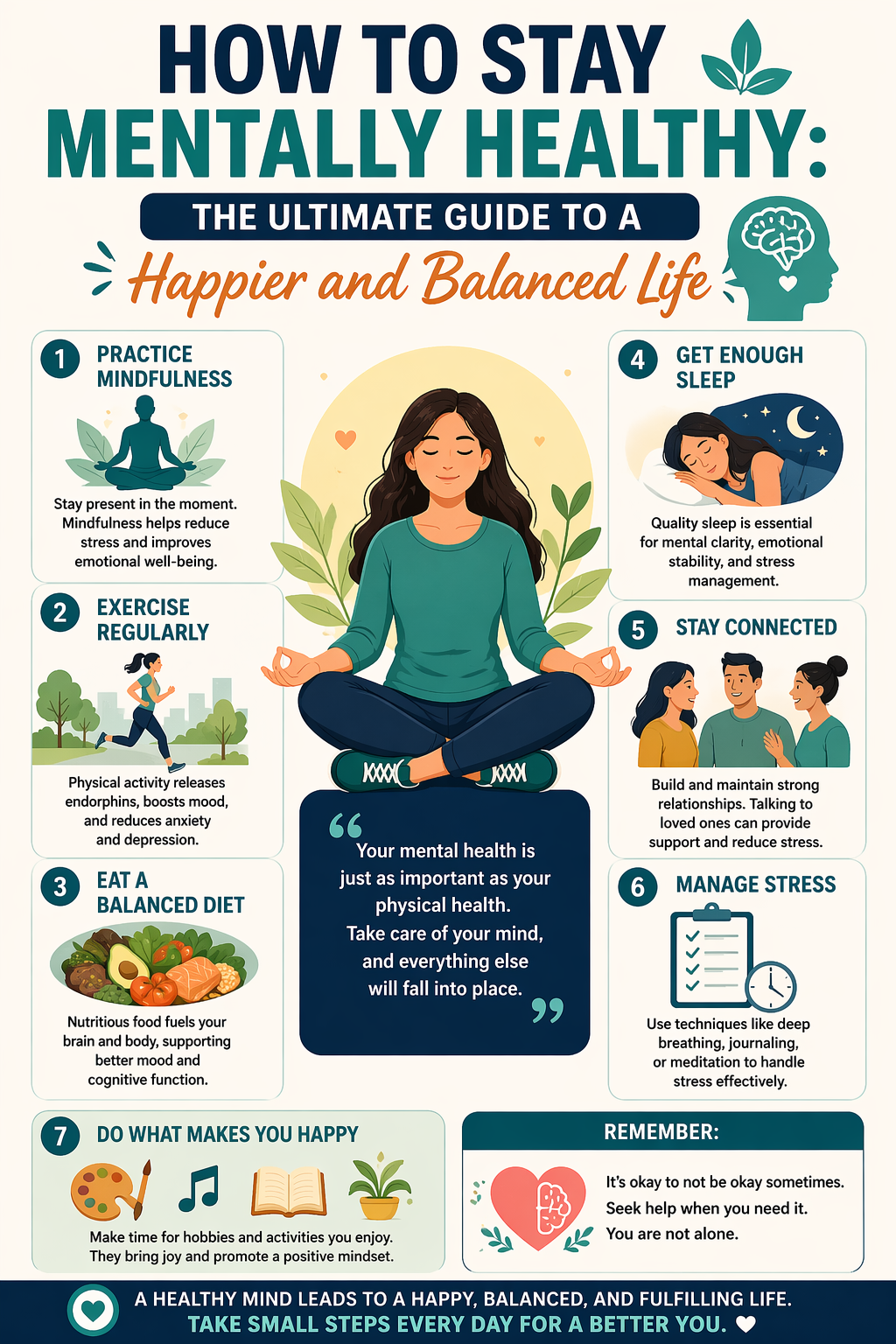
Mental health is just as important as physical health, yet it is often overlooked in our busy modern lives. Stress, anxiety, depression, and emotional burnout have become common problems worldwide. The good news is that there are many practical and effective ways to improve your mental health and build a more balanced, fulfilling life.
In this comprehensive guide, you will discover proven strategies, daily habits, and lifestyle changes that can help you feel better mentally and emotionally.
What is Mental Health?
Mental health refers to your emotional, psychological, and social well-being. It affects how you think, feel, and act in your daily life. Good mental health helps you handle stress, make better decisions, and build strong relationships.
Poor mental health, on the other hand, can lead to issues like anxiety, depression, low self-esteem, and lack of motivation.
Why Mental Health Matters
Taking care of your mental health is essential because it:
- Improves your mood and happiness
- Boosts productivity and focus
- Strengthens relationships
- Helps you cope with stress
- Enhances physical health
Ignoring mental health can lead to serious long-term problems, both emotionally and physically.
1. Practice Daily Mindfulness
Mindfulness means staying present in the moment without worrying about the past or future.
How to practice mindfulness:
- Focus on your breathing for 5–10 minutes
- Observe your thoughts without judgment
- Pay attention to your surroundings
Mindfulness helps reduce stress, improve concentration, and increase emotional stability.
2. Stay Physically Active
Exercise is one of the most effective ways to improve mental health. Physical activity releases endorphins, also known as “feel-good hormones.”
Benefits of exercise:
- Reduces anxiety and depression
- Improves mood
- Boosts energy levels
- Enhances sleep quality
You don’t need a gym. Walking, jogging, yoga, or home workouts can be enough.
3. Get Enough Sleep
Sleep plays a crucial role in mental well-being. Poor sleep can lead to stress, irritability, and lack of focus.
Tips for better sleep:
- Maintain a regular sleep schedule
- Avoid screens before bedtime
- Keep your bedroom calm and dark
- Limit caffeine intake
Aim for 7–9 hours of quality sleep every night.
4. Eat a Healthy Diet
What you eat directly affects your brain and mood.
Mental health-friendly foods:
- Fruits and vegetables
- Whole grains
- Nuts and seeds
- Fish rich in omega-3
Avoid excessive junk food, sugar, and processed items, as they can negatively impact your mood.
5. Build Strong Relationships
Humans are social beings. Strong connections with family and friends improve emotional well-being.
Ways to strengthen relationships:
- Spend quality time with loved ones
- Communicate openly
- Offer and seek support
Having someone to talk to can significantly reduce stress and loneliness.
6. Manage Stress Effectively
Stress is a normal part of life, but too much stress can harm your mental health.
Stress management techniques:
- Deep breathing exercises
- Meditation
- Time management
- Taking breaks
Learning how to handle stress can prevent burnout and anxiety.
7. Limit Social Media Use
While social media connects people, excessive use can harm mental health.
Negative effects:
- Comparison with others
- Reduced self-esteem
- Increased anxiety
Tips:
- Set daily time limits
- Take regular digital detox breaks
- Follow positive and inspiring content
8. Practice Gratitude
Gratitude shifts your focus from what you lack to what you have.
Simple gratitude practices:
- Write down 3 things you’re thankful for daily
- Appreciate small moments
- Express thanks to others
Gratitude improves happiness and reduces negative thinking.
9. Learn to Say No
Overcommitting yourself can lead to stress and exhaustion.
Why saying no is important:
- Protects your energy
- Reduces pressure
- Helps maintain balance
Set healthy boundaries and prioritize your well-being.
10. Take Breaks and Relax
Constant work without rest can lead to mental fatigue.
Relaxation ideas:
- Listen to music
- Take a walk in nature
- Read a book
- Practice hobbies
Taking breaks refreshes your mind and improves productivity.
11. Seek Professional Help When Needed
If you’re struggling with severe stress, anxiety, or depression, don’t hesitate to seek help.
Options include:
- Therapists
- Counselors
- Mental health professionals
Getting help is a sign of strength, not weakness.
12. Set Realistic Goals
Setting achievable goals gives you a sense of purpose and accomplishment.
Tips:
- Break big goals into small steps
- Celebrate progress
- Stay consistent
Avoid putting too much pressure on yourself.
13. Stay Positive
Positive thinking doesn’t mean ignoring problems—it means approaching challenges with a better mindset.
Ways to stay positive:
- Replace negative thoughts
- Focus on solutions
- Surround yourself with positive people
14. Spend Time in Nature
Nature has a calming effect on the mind.
Benefits:
- Reduces stress
- Improves mood
- Boosts creativity
Even a short walk outside can make a big difference.
15. Develop Healthy Routines
Having a daily routine provides structure and stability.
Include:
- Regular sleep time
- Exercise
- Healthy meals
- Relaxation
Consistency is key to long-term mental health.
16. Avoid Harmful Habits
Unhealthy habits like smoking, excessive alcohol, or substance use can worsen mental heal
Replace with:
- Exercise
- Meditation
- Healthy hobbies
17. Practice Self-Care
Self-care is not a luxury—it’s a necessity.
Self-care ideas:
- Take time for yourself
- Do what you enjoy
- Rest when needed
18. Keep Learning New Skills
Learning something new keeps your brain active and boosts confidence.
Examples:
- Learning a language
- Cooking
- Reading books
19. Help Others
Helping others creates a sense of purpose and happiness.
Ways to help:
- Volunteer
- Support friends
- Share knowledge
20. Accept Yourself
Self-acceptance is key to mental peace.
Remember:
- No one is perfect
- Mistakes are part of growth
- Be kind to yourself
Final Thoughts
Improving your mental health is a continuous journey, not a one-time task. By adopting these simple yet powerful habits, you can create a healthier, happier, and more balan