
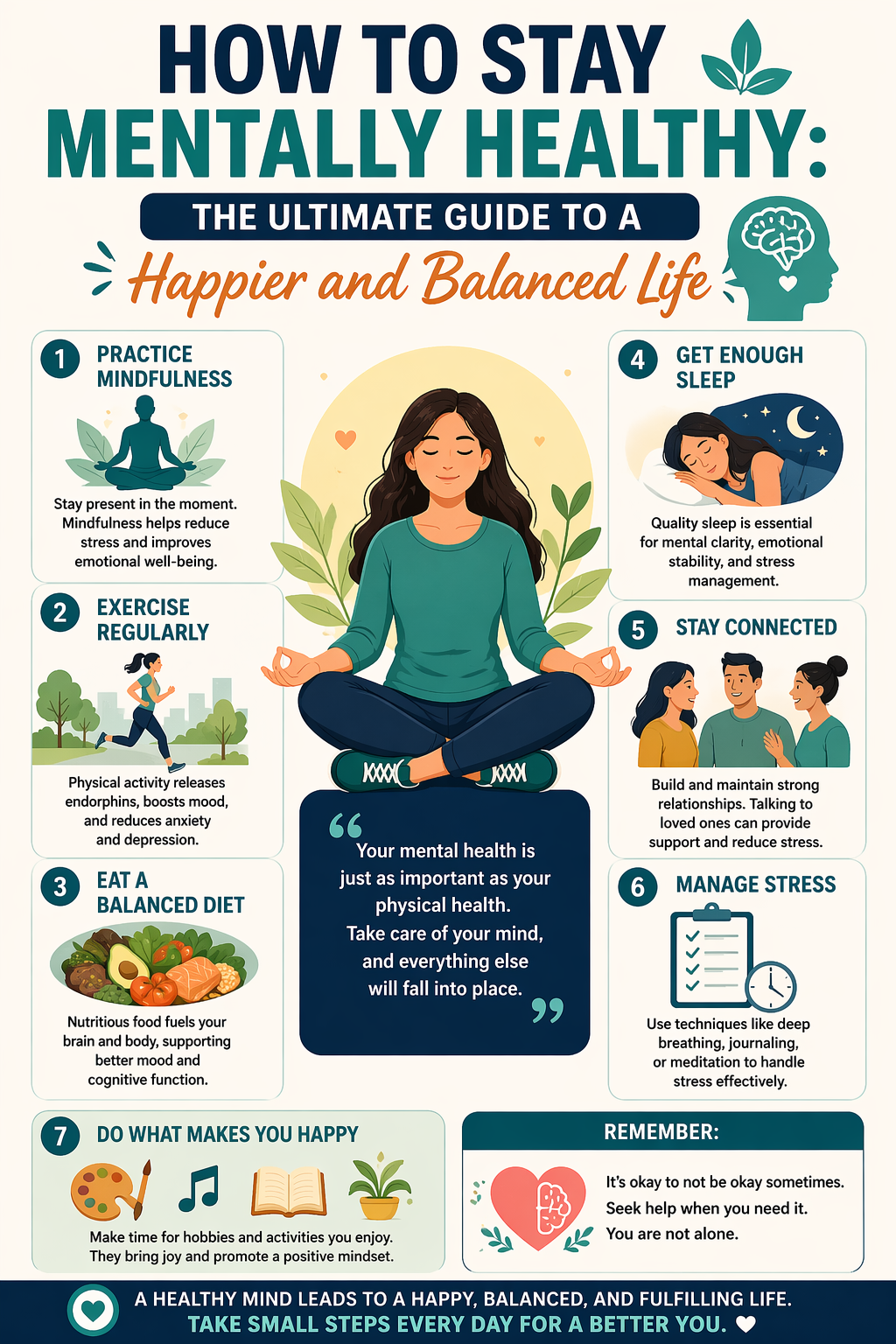
In today’s fast-moving world, staying mentally healthy is no longer optional—it’s essential. With increasing work pressure, digital distractions, and everyday stress, many people struggle to maintain their mental well-being. However, the good news is that improving and maintaining your mental health is completely achievable with the right habits and mindset.
In this complete guide, you will learn practical, proven, and easy ways to stay mentally healthy and live a more peaceful, productive, and fulfilling life.
What is Mental Health?
Mental health refers to your emotional, psychological, and social well-being. It affects how you think, feel, act, and handle daily situations.
Being mentally healthy doesn’t mean you are always happy. Instead, it means:
- You can manage stress effectively
- You can handle challenges and setbacks
- You maintain emotional balance
- You build and maintain healthy relationships
Why Staying Mentally Healthy is Important
Maintaining good mental health is crucial for every aspect of your life.
Benefits of good mental health:
- Improved mood and happiness
- Better concentration and productivity
- Stronger relationships
- Increased confidence and self-esteem
- Better physical health
On the other hand, poor mental health can lead to anxiety, depression, burnout, and even physical illnesses.
1. Start Your Day with a Positive Routine
How you begin your day sets the tone for everything that follows.
Healthy morning habits:
- Wake up early and avoid rushing
- Drink a glass of water
- Practice gratitude
- Do light stretching or exercise
- Avoid checking your phone immediately
A calm and positive morning routine helps reduce stress and increases focus throughout the day.
2. Practice Mindfulness Daily
Mindfulness means being fully present in the moment.
Benefits:
- Reduces overthinking
- Improves emotional control
- Decreases anxiety
How to practice mindfulness:
- Focus on your breathing
- Observe your thoughts without judgment
- Pay attention to your surroundings
Even 5–10 minutes of mindfulness daily can make a big difference.
3. Stay Physically Active
Regular physical activity is one of the most effective ways to stay mentally healthy.
Why it works:
Exercise releases endorphins—chemicals in the brain that act as natural mood boosters.
Easy ways to stay active:
- Walking or jogging
- Home workouts
- Yoga or stretching
- Cycling
Try to stay active for at least 30 minutes a day.
4. Eat a Brain-Healthy Diet
Your diet plays a major role in your mental well-being.
Foods that support mental health:
- Fresh fruits and vegetables
- Whole grains
- Nuts and seeds
- Fish rich in omega-3 fatty acids
Avoid:
- Processed foods
- Excess sugar
- Junk food
A balanced diet helps improve mood, memory, and energy levels.
5. Get Quality Sleep Every Night
Sleep is essential for both physical and mental recovery.
Effects of poor sleep:
- Increased stress
- Irritability
- Lack of focus
- Anxiety
Tips for better sleep:
- Maintain a consistent sleep schedule
- Avoid screens before bedtime
- Keep your bedroom quiet and dark
- Limit caffeine intake
Aim for 7–9 hours of sleep every night.
6. Manage Stress in Healthy Ways
Stress is a part of life, but unmanaged stress can damage your mental health.
Effective stress management techniques:
- Deep breathing exercises
- Meditation
- Time management
- Taking regular breaks
Learning to manage stress helps prevent burnout and improves emotional stability.
7. Build Strong Social Connections
Humans are naturally social beings. Healthy relationships are essential for mental well-being.
Ways to strengthen relationships:
- Spend quality time with loved ones
- Communicate openly
- Be supportive and understanding
Having someone to talk to can greatly reduce stress and loneliness.
8. Limit Social Media and Screen Time
While technology connects us, excessive use can harm mental health.
Negative effects:
- Comparison with others
- Low self-esteem
- Increased anxiety
Tips:
- Set daily screen limits
- Take digital detox breaks
- Follow positive content
9. Practice Gratitude Every Day
Gratitude helps shift your focus from negative to positive.
How to practice gratitude:
- Write down 3 things you’re thankful for daily
- Appreciate small moments
- Express gratitude to others
Gratitude improves happiness and reduces stress.
10. Learn to Say No and Set Boundaries
Overcommitting yourself can lead to stress and burnout.
Why boundaries matter:
- Protect your energy
- Reduce pressure
- Improve work-life balance
Don’t be afraid to say no when necessary.
11. Take Regular Breaks and Relax
Working non-stop can lead to mental exhaustion.
Relaxation ideas:
- Take short walks
- Listen to music
- Watch something you enjoy
- Practice hobbies
Relaxation improves productivity and mental clarity.
12. Spend Time in Nature
Nature has a powerful calming effect on the mind.
Benefits:
- Reduces stress
- Improves mood
- Boosts creativity
Even 10–15 minutes outside can make a big difference.
13. Avoid Negative Thinking Patterns
Negative thinking can harm your mental health.
Common negative patterns:
- Overthinking
- Self-doubt
- Catastrophizing
How to overcome:
- Challenge negative thoughts
- Focus on solutions
- Practice positive affirmations
14. Keep Learning and Growing
Learning new skills keeps your mind active and engaged.
Ideas:
- Read books
- Learn a new skill
- Take online courses
Continuous growth improves confidence and mental strength.
15. Help Others and Practice Kindness
Helping others boosts your own happiness.
Ways to help:
- Volunteer
- Support friends and family
- Share knowledge
Acts of kindness create a sense of purpose.
16. Develop a Healthy Routine
A structured daily routine brings stability and balance.
Include:
- Regular sleep time
- Exercise
- Healthy meals
- Relaxation
Consistency is key to maintaining mental health.
17. Avoid Harmful Habits
Certain habits can damage your mental well-being.
Avoid:
- Smoking
- Excess alcohol
- Drug use
Replace them with healthier alternatives like exercise and hobbies.
18. Focus on What You Can Control
Worrying about things beyond your control increases stress.
Instead:
- Focus on your actions
- Accept uncertainty
- Stay present
This mindset reduces anxiety and improves peace of mind.
19. Practice Self-Compassion
Be kind to yourself, especially during difficult times.
Remember:
- Nobody is perfect
- Mistakes are part of growth
- Treat yourself like a friend
Self-compassion improves emotional resilience.
20. Seek Professional Help When Needed
If you feel overwhelmed, seeking help is important.
Options:
- Therapists
- Counselors
- Mental health professionals
Getting help is a strong and positive step toward healing.
Final Thoughts
Staying mentally healthy is a continuous journey. It’s about building small, positive habits every day that support your emotional and psychological well-being.
You don’t need to change everything at once. Start with one or two habits and gradually build a lifestyle that supports your mental health.
Remember: taking care of your mind is one of the most important investments you can make in your life.
SEO Keywords
- how to stay mentally healthy
- mental health tips
- ways to improve mental health
- mental wellness guide
- stress management techniques
- healthy lifestyle for mental health
- daily habits for mental health
Meta Title:
How to Stay Mentally Healthy: 20 Powerful Tips for a Better Life
Meta Description:
Discover how to stay mentally healthy with 20 proven tips. Improve your mood, reduce stress, and build a happier, balanced life with this complete guide.
If you want next step, I can help you with:
✅ Featured image + thumbnail design idea
✅ Internal linking strategy for SEO
✅ WordPress posting format (with headings + schema) 🚀
In today’s fast-moving world, staying mentally healthy is no longer optional—it’s essential. With increasing work pressure, digital distractions, and everyday stress, many people struggle to maintain their mental well-being. However, the good news is that improving and maintaining your mental health is completely achievable with the right habits and mindset.
In this complete guide, you will learn practical, proven, and easy ways to stay mentally healthy and live a more peaceful, productive, and fulfilling life.
What is Mental Health?
Mental health refers to your emotional, psychological, and social well-being. It affects how you think, feel, act, and handle daily situations.
Being mentally healthy doesn’t mean you are always happy. Instead, it means:
- You can manage stress effectively
- You can handle challenges and setbacks
- You maintain emotional balance
- You build and maintain healthy relationships
Why Staying Mentally Healthy is Important
Maintaining good mental health is crucial for every aspect of your life.
Benefits of good mental health:
- Improved mood and happiness
- Better concentration and productivity
- Stronger relationships
- Increased confidence and self-esteem
- Better physical health
On the other hand, poor mental health can lead to anxiety, depression, burnout, and even physical illnesses.
1. Start Your Day with a Positive Routine
How you begin your day sets the tone for everything that follows.
Healthy morning habits:
- Wake up early and avoid rushing
- Drink a glass of water
- Practice gratitude
- Do light stretching or exercise
- Avoid checking your phone immediately
A calm and positive morning routine helps reduce stress and increases focus throughout the day.
2. Practice Mindfulness Daily
Mindfulness means being fully present in the moment.
Benefits:
- Reduces overthinking
- Improves emotional control
- Decreases anxiety
How to practice mindfulness:
- Focus on your breathing
- Observe your thoughts without judgment
- Pay attention to your surroundings
Even 5–10 minutes of mindfulness daily can make a big difference.
3. Stay Physically Active
Regular physical activity is one of the most effective ways to stay mentally healthy.
Why it works:
Exercise releases endorphins—chemicals in the brain that act as natural mood boosters.
Easy ways to stay active:
- Walking or jogging
- Home workouts
- Yoga or stretching
- Cycling
Try to stay active for at least 30 minutes a day.
4. Eat a Brain-Healthy Diet
Your diet plays a major role in your mental well-being.
Foods that support mental health:
- Fresh fruits and vegetables
- Whole grains
- Nuts and seeds
- Fish rich in omega-3 fatty acids
Avoid:
- Processed foods
- Excess sugar
- Junk food
A balanced diet helps improve mood, memory, and energy levels.
5. Get Quality Sleep Every Night
Sleep is essential for both physical and mental recovery.
Effects of poor sleep:
- Increased stress
- Irritability
- Lack of focus
- Anxiety
Tips for better sleep:
- Maintain a consistent sleep schedule
- Avoid screens before bedtime
- Keep your bedroom quiet and dark
- Limit caffeine intake
Aim for 7–9 hours of sleep every night.
6. Manage Stress in Healthy Ways
Stress is a part of life, but unmanaged stress can damage your mental health.
Effective stress management techniques:
- Deep breathing exercises
- Meditation
- Time management
- Taking regular breaks
Learning to manage stress helps prevent burnout and improves emotional stability.
7. Build Strong Social Connections
Humans are naturally social beings. Healthy relationships are essential for mental well-being.
Ways to strengthen relationships:
- Spend quality time with loved ones
- Communicate openly
- Be supportive and understanding
Having someone to talk to can greatly reduce stress and loneliness.
8. Limit Social Media and Screen Time
While technology connects us, excessive use can harm mental health.
Negative effects:
- Comparison with others
- Low self-esteem
- Increased anxiety
Tips:
- Set daily screen limits
- Take digital detox breaks
- Follow positive content
9. Practice Gratitude Every Day
Gratitude helps shift your focus from negative to positive.
How to practice gratitude:
- Write down 3 things you’re thankful for daily
- Appreciate small moments
- Express gratitude to others
Gratitude improves happiness and reduces stress.
10. Learn to Say No and Set Boundaries
Overcommitting yourself can lead to stress and burnout.
Why boundaries matter:
- Protect your energy
- Reduce pressure
- Improve work-life balance
Don’t be afraid to say no when necessary.
11. Take Regular Breaks and Relax
Working non-stop can lead to mental exhaustion.
Relaxation ideas:
- Take short walks
- Listen to music
- Watch something you enjoy
- Practice hobbies
Relaxation improves productivity and mental clarity.
12. Spend Time in Nature
Nature has a powerful calming effect on the mind.
Benefits:
- Reduces stress
- Improves mood
- Boosts creativity
Even 10–15 minutes outside can make a big difference.
13. Avoid Negative Thinking Patterns
Negative thinking can harm your mental health.
Common negative patterns:
- Overthinking
- Self-doubt
- Catastrophizing
How to overcome:
- Challenge negative thoughts
- Focus on solutions
- Practice positive affirmations
14. Keep Learning and Growing
Learning new skills keeps your mind active and engaged.
Ideas:
- Read books
- Learn a new skill
- Take online courses
Continuous growth improves confidence and mental strength.
15. Help Others and Practice Kindness
Helping others boosts your own happiness.
Ways to help:
- Volunteer
- Support friends and family
- Share knowledge
Acts of kindness create a sense of purpose.
16. Develop a Healthy Routine
A structured daily routine brings stability and balance.
Include:
- Regular sleep time
- Exercise
- Healthy meals
- Relaxation
Consistency is key to maintaining mental health.
17. Avoid Harmful Habits
Certain habits can damage your mental well-being.
Avoid:
- Smoking
- Excess alcohol
- Drug use
Replace them with healthier alternatives like exercise and hobbies.
18. Focus on What You Can Control
Worrying about things beyond your control increases stress.
Instead:
- Focus on your actions
- Accept uncertainty
- Stay present
This mindset reduces anxiety and improves peace of mind.
19. Practice Self-Compassion
Be kind to yourself, especially during difficult times.
Remember:
- Nobody is perfect
- Mistakes are part of growth
- Treat yourself like a friend
Self-compassion improves emotional resilience.
20. Seek Professional Help When Needed
If you feel overwhelmed, seeking help is important.
Options:
- Therapists
- Counselors
- Mental health professionals
Getting help is a strong and positive step toward healing.
Final Thoughts
Staying mentally healthy is a continuous journey. It’s about building small, positive habits every day that support your emotional and psychological well-being.
You don’t need to change everything at once. Start with one or two habits and gradually build a lifestyle that supports your mental health.
Remember: taking care of your mind is one of the most important .