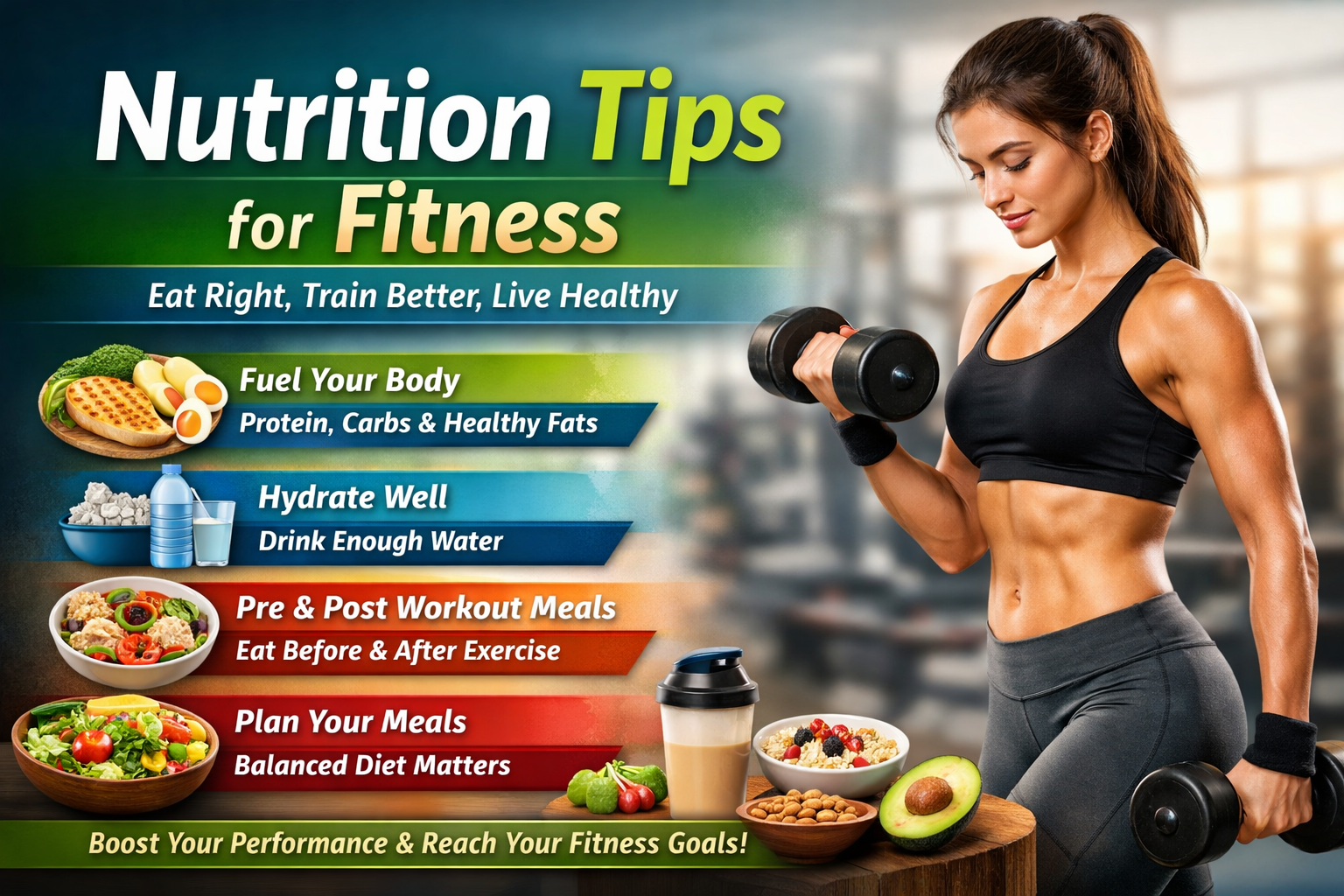
Fitness is not only about exercise; nutrition plays an equally important role in achieving your health and fitness goals. Whether your goal is weight loss, muscle gain, increased energy, or overall wellness, proper nutrition is the foundation of a healthy lifestyle. Many people spend hours in the gym but fail to see results because they ignore the importance of balanced nutrition.
Nutrition fuels your body, supports muscle recovery, improves endurance, and boosts overall performance. Without the right nutrients, your body cannot perform at its best during workouts or recover properly afterward.
In this complete guide, we will explore essential nutrition tips for fitness that will help you improve your physical performance, maintain energy levels, and achieve long-term health benefits.
Why Nutrition is Important for Fitness
Nutrition is the fuel that powers your body. Just like a car needs the right type of fuel to run efficiently, your body requires proper nutrients to function at its best.
Proper nutrition helps to:
- Improve workout performance
- Build and repair muscles
- Boost metabolism
- Increase energy levels
- Support weight management
- Strengthen the immune system
- Enhance recovery after exercise
When you combine regular exercise with a balanced diet, you create the perfect environment for your body to grow stronger and healthier.
The Key Nutrients Your Body Needs
To support fitness and overall health, your body requires three main macronutrients and several micronutrients.
1. Protein: The Building Block of Muscles
Protein is essential for muscle growth and repair. When you exercise, especially during strength training, tiny tears occur in your muscle fibers. Protein helps repair these fibers and build stronger muscles.
Good sources of protein include:
- Eggs
- Chicken breast
- Fish
- Greek yogurt
- Lentils
- Beans
- Tofu
- Nuts and seeds
For people who exercise regularly, consuming protein after workouts helps with muscle recovery and growth.
2. Carbohydrates: The Body’s Main Energy Source
Carbohydrates are the primary source of energy for your body. During exercise, your muscles use glycogen (stored carbohydrates) for fuel.
Healthy carbohydrate sources include:
- Brown rice
- Oats
- Whole grain bread
- Sweet potatoes
- Fruits
- Vegetables
- Quinoa
Complex carbohydrates are better than refined carbs because they provide long-lasting energy and contain more fiber.
3. Healthy Fats: Essential for Hormones and Energy
Many people think fats are bad for health, but healthy fats are necessary for hormone production, brain health, and long-lasting energy.
Healthy fat sources include:
- Avocados
- Olive oil
- Almonds
- Walnuts
- Chia seeds
- Flaxseeds
- Fatty fish like salmon
Healthy fats also help absorb vitamins such as A, D, E, and K.
Best Pre-Workout Nutrition Tips
What you eat before a workout significantly affects your performance and energy levels.
Eat 1–2 Hours Before Exercise
Eating a balanced meal before exercise gives your body the fuel it needs. A good pre-workout meal should contain carbohydrates and a moderate amount of protein.
Examples:
- Oatmeal with fruits
- Whole grain toast with peanut butter
- Banana with yogurt
- Brown rice with grilled chicken
Avoid Heavy and Fatty Foods
Heavy foods can make you feel sluggish during workouts. Stick to light and easily digestible meals.
Post-Workout Nutrition Tips
After exercise, your body needs nutrients to recover and rebuild muscles.
Eat Protein for Muscle Recovery
Protein helps repair muscle fibers damaged during workouts.
Good post-workout protein foods:
- Protein smoothies
- Eggs
- Chicken breast
- Cottage cheese
- Greek yogurt
Add Carbohydrates to Restore Energy
Carbohydrates help replenish glycogen stores used during exercise.
Good options include:
- Banana
- Sweet potatoes
- Rice
- Whole grain bread
A balanced post-workout meal supports faster recovery and improved performance.
Importance of Hydration for Fitness
Water is one of the most important components of nutrition. Even mild dehydration can affect physical performance and energy levels.
Benefits of proper hydration include:
- Regulates body temperature
- Improves endurance
- Prevents muscle cramps
- Supports metabolism
- Helps nutrient transport
How Much Water Should You Drink?
Most fitness experts recommend drinking:
- 2–3 liters of water daily
- More if you exercise regularly or sweat heavily
Drink water before, during, and after workouts to maintain proper hydration.
Healthy Meal Planning for Fitness
Planning your meals helps maintain a consistent and balanced diet.
Example Daily Meal Plan
Breakfast
- Oatmeal with banana and almonds
- Boiled eggs
- Green tea
Lunch
- Brown rice
- Grilled chicken or fish
- Mixed vegetables
Snack
- Apple with peanut butter
- Greek yogurt
Dinner
- Quinoa or whole grain bread
- Grilled vegetables
- Lean protein like chicken or tofu
Healthy meal planning prevents overeating and ensures your body receives the nutrients it needs.
Best Foods for Fitness
Some foods are particularly beneficial for people who exercise regularly.
Eggs
Eggs are rich in high-quality protein and essential amino acids that support muscle repair and growth.
Bananas
Bananas provide quick energy and are rich in potassium, which helps prevent muscle cramps.
Oats
Oats are an excellent source of complex carbohydrates and fiber that provide long-lasting energy.
Greek Yogurt
Greek yogurt contains protein and probiotics that support digestion and muscle recovery.
Spinach
Spinach is packed with iron, vitamins, and antioxidants that help improve endurance and overall health.
Nutrition Tips for Muscle Gain
If your goal is to build muscle, you need to consume more calories and protein.
Key tips include:
- Eat protein with every meal
- Increase calorie intake gradually
- Focus on strength training exercises
- Consume protein after workouts
- Get enough sleep for muscle recovery
Muscle growth happens during recovery, so nutrition and rest are equally important.
Nutrition Tips for Weight Loss
For people trying to lose weight, nutrition plays a major role.
Effective tips include:
- Eat more whole foods
- Reduce processed foods
- Control portion sizes
- Increase protein intake
- Drink plenty of water
- Avoid sugary drinks
A balanced diet combined with regular exercise is the most sustainable way to lose weight.
Common Nutrition Mistakes in Fitness
Many people make mistakes that slow down their fitness progress.
Skipping Meals
Skipping meals can reduce energy levels and slow metabolism.
Not Eating Enough Protein
Protein is essential for muscle repair and recovery.
Eating Too Much Processed Food
Processed foods contain excess sugar, salt, and unhealthy fats.
Ignoring Hydration
Dehydration can affect endurance, strength, and recovery.
Avoiding these mistakes will help you achieve better results.
The Role of Supplements in Fitness
While whole foods should always be your main source of nutrients, some people use supplements to support their fitness goals.
Common supplements include:
- Protein powder
- Creatine
- Multivitamins
- Omega-3 fatty acids
However, supplements should not replace a balanced diet. It is always best to consult a health professional before taking supplements.
Importance of Consistency
One of the most important aspects of nutrition for fitness is consistency. Following a healthy diet for a few days will not produce long-term results.
Successful fitness journeys require:
- Consistent healthy eating
- Regular exercise
- Proper sleep
- Stress management
Small daily habits lead to big improvements over time.
Conclusion
Proper nutrition is the foundation of a successful fitness journey. While exercise helps strengthen your body, nutrition provides the fuel and nutrients needed for growth, recovery, and overall health.
By focusing on balanced meals, adequate protein intake, healthy carbohydrates, good fats, and proper hydration, you can improve your fitness performance and achieve your health goals.
Remember that fitness is a long-term commitment. Consistency, discipline, and healthy eating habits will help you build a stronger, healthier body and maintain your well-being for years to come.
Start making healthier nutrition choices today, and you will soon notice improvements in your energy, strength, and overall fitness level.