
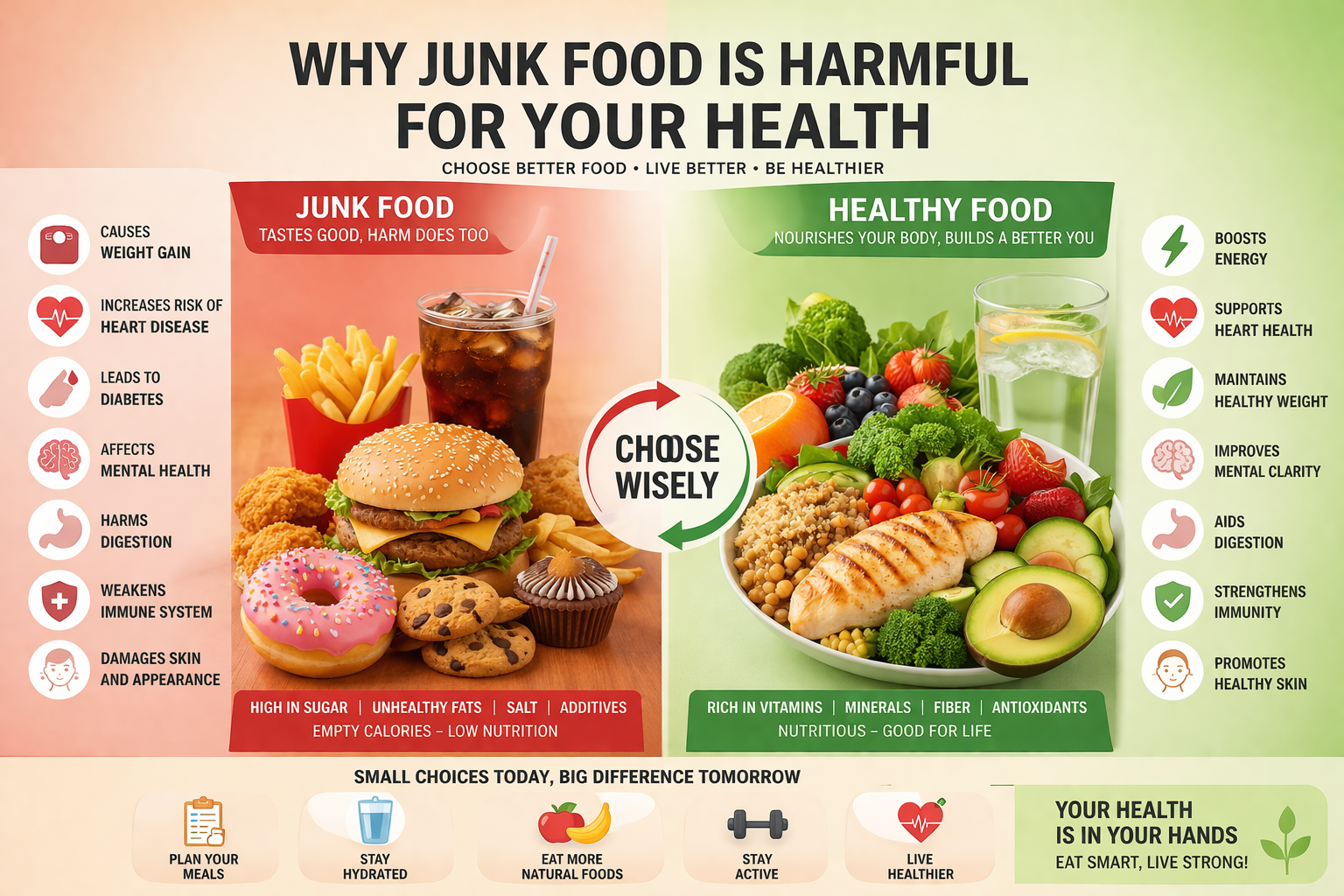

In today’s fast-paced world, junk food has become a regular part of many people’s daily diet. From burgers and fries to sugary drinks and packaged snacks, these convenient options are everywhere. While they may taste delicious and save time, the long-term effects of junk food on your health can be serious and even life-threatening.
This comprehensive guide explores why junk food is harmful for your health, how it affects your body and mind, and what you can do to replace it with healthier alternatives.
What is Junk Food?
Junk food refers to highly processed foods that are low in essential nutrients like vitamins, minerals, and fiber, but high in calories, sugar, salt, and unhealthy fats. Common examples include:
- Fast food (burgers, pizza, fried chicken)
- Sugary beverages (soft drinks, energy drinks)
- Packaged snacks (chips, cookies, candy)
- Instant noodles and processed meals
These foods are designed to be addictive and satisfying, but they provide little to no nutritional value.
Nutritional Deficiency: Empty Calories
One of the biggest problems with junk food is that it provides “empty calories.” This means you consume a lot of energy without getting the nutrients your body needs.
Key Issues:
- Lack of vitamins and minerals
- Low fiber content
- Poor protein quality
Over time, this can lead to deficiencies, making your body weaker and more prone to illness.
Weight Gain and Obesity
Junk food is often high in calories, unhealthy fats, and sugar, all of which contribute to rapid weight gain.
Why it causes weight gain:
- High calorie density
- Large portion sizes
- Low satiety (you feel hungry again quickly)
Regular consumption can lead to obesity, which increases the risk of several chronic diseases such as heart disease and diabetes.
Increased Risk of Heart Disease
Many junk foods contain trans fats and high levels of sodium, which are harmful to your heart.
Effects on heart health:
- Raises bad cholesterol (LDL)
- Lowers good cholesterol (HDL)
- Increases blood pressure
These factors significantly increase the risk of heart attacks and strokes.
Impact on Mental Health
Junk food doesn’t just affect your body—it also impacts your brain.
Mental health effects:
- Increased risk of depression and anxiety
- Mood swings due to sugar spikes and crashes
- Reduced cognitive function
A poor diet can negatively affect brain chemistry, leading to emotional instability.
Digestive Problems
Junk food lacks dietary fiber, which is essential for proper digestion.
Common issues:
- Constipation
- Bloating
- Acid reflux
Over time, poor digestion can lead to more serious gastrointestinal problems.
Increased Risk of Type 2 Diabetes
High sugar intake from junk food can cause insulin resistance, a major factor in developing type 2 diabetes.
How it happens:
- Frequent sugar spikes
- Increased insulin demand
- Gradual insulin resistance
This condition can become chronic and requires lifelong management.
Addiction and Cravings
Junk food is designed to be addictive. It triggers the brain’s reward system, making you crave more.
Why it’s addictive:
- High sugar and fat content
- Artificial flavor enhancers
- Instant gratification
This can lead to overeating and unhealthy eating habits.
Effects on Skin and Appearance
Your diet plays a big role in your physical appearance.
Negative effects:
- Acne and pimples
- Dull skin
- Premature aging
Junk food can increase inflammation in the body, which shows up on your skin.
Weak Immune System
A diet high in junk food weakens your immune system, making it harder for your body to fight infections.
Reasons:
- Lack of essential nutrients
- High sugar intake suppresses immune response
- Increased inflammation
As a result, you may get sick more often.
Poor Energy Levels
While junk food may give a quick energy boost, it doesn’t last long.
What happens:
- Rapid spike in blood sugar
- Sudden energy crash
- Feeling tired and sluggish
This cycle can affect productivity and daily performance.
How to Reduce Junk Food Consumption
Breaking the habit of eating junk food can be challenging, but it’s possible with the right approach.
Practical Tips:
- Start gradually reducing intake
- Replace junk food with healthy snacks
- Drink more water
- Plan your meals in advance
- Avoid keeping junk food at home
Healthy Alternatives to Junk Food
Instead of completely eliminating your favorite foods, try healthier versions.
Smart swaps:
- Fresh fruits instead of candy
- Nuts instead of chips
- Homemade meals instead of fast food
- Smoothies instead of sugary drinks
These alternatives are both tasty and nutritious.
Building a Balanced Diet
A healthy diet includes a variety of nutrients that your body needs.
Key components:
- Protein (meat, fish, eggs, legumes)
- Healthy fats (nuts, seeds, olive oil)
- Carbohydrates (whole grains, vegetables)
- Vitamins and minerals (fruits and vegetables)
Eating balanced meals helps maintain overall health and energy.
Conclusion
Junk food may be convenient and tasty, but its negative effects on your health cannot be ignored. From weight gain and heart disease to mental health issues and low energy levels, the risks are significant.
Making small, consistent changes in your eating habits can lead to big improvements in your health. Choose whole, nutritious foods over processed options, and prioritize your well-being.
Remember, your health is your greatest asset—take care of it by making smarter food choices every